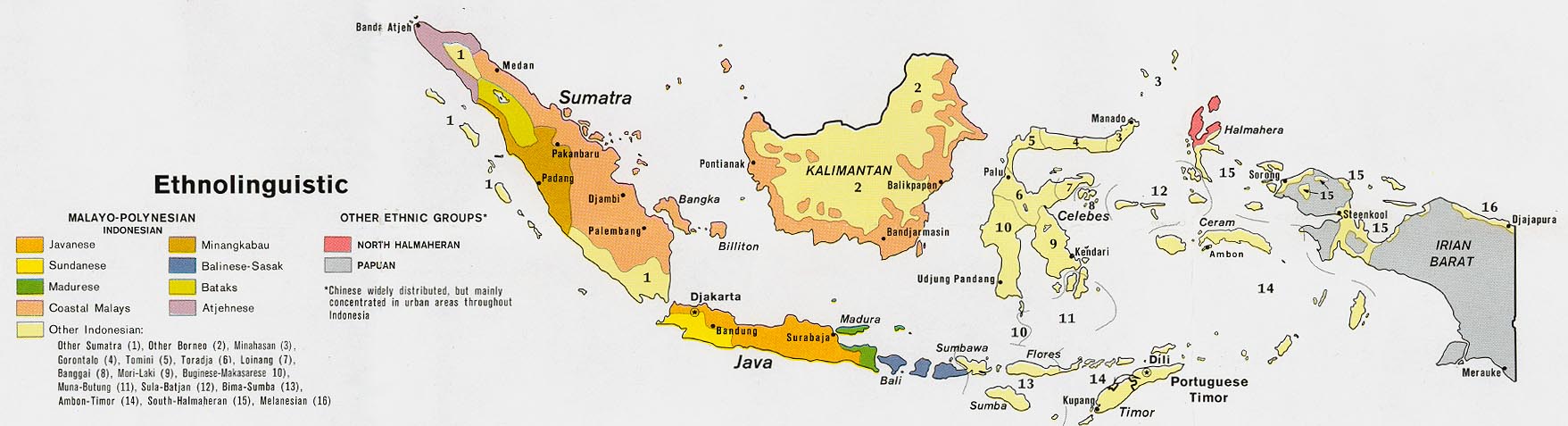
The Pegagan are an ethnic group of South Sumatra, Indonesia, living primarily in the Ogan Ilir region and surrounding areas along the river systems that have shaped life in this part of Sumatra for centuries. They are closely associated with the broader Ogan cultural group and are sometimes referred to locally as part of the Ogan people. Their homeland lies in the fertile lowlands and river valleys south of Palembang, where agriculture and fishing have long sustained village life. The Pegagan speak a variety of Central Malay related to the languages of neighboring Ogan communities, while Indonesian is widely used in education, government, and commerce.
Historically, the Pegagan developed within the Malay cultural world of South Sumatra. Rivers served as important transportation routes, connecting villages to markets and regional centers. Community identity remains closely tied to local traditions, family networks, and the agricultural lifestyle that has characterized the region for generations. Although modernization has brought new opportunities, many Pegagan continue to maintain strong connections to their ancestral villages and cultural heritage.
Rice farming remains the foundation of Pegagan life. Many families cultivate rice fields and supplement their income through fishing, raising small livestock, and selling local products. Some households are also involved in handicrafts, including embroidered textiles and other traditional goods. The fertile land and abundant waterways of South Sumatra provide resources that support both agriculture and village economies.
They highly value family relationships, and extended families often live near one another and provide mutual support. Villages serve as the center of social life, where community cooperation remains important during planting, harvesting, weddings, and religious celebrations. Children are taught to respect elders and contribute to family responsibilities. Traditional foods commonly include rice, fish, vegetables, tropical fruits, and locally produced foods typical of South Sumatra. As education and transportation improve, younger generations increasingly pursue employment in business, government service, and urban professions while maintaining ties to their home communities.
The Pegagan are overwhelmingly Muslim, and Islam plays a central role in both personal and community life. Mosques are important gathering places, and religious observances such as daily prayers, Ramadan fasting, and Islamic festivals are widely practiced. Religious devotion is generally strong, and Islamic values influence family life, social relationships, and community expectations.
At the same time, traditional customs and older cultural beliefs remain intertwined with Islamic practice in some areas. Certain ceremonies, local traditions, and folk beliefs continue to influence community life alongside formal Islamic observance. This blending of religious and traditional practices reflects patterns found among many rural Muslim communities in Indonesia. Most Pegagan have had little opportunity to hear a clear explanation of the gospel and the biblical teaching that salvation comes through faith in Jesus Christ and His finished work rather than through religious observance.
The Pegagan need greater access to the gospel through trusted relationships, Scripture resources in languages they understand, and faithful believers who can communicate biblical truth with wisdom and respect. Although some Christian resources are available in related languages, there remains a significant need for ongoing gospel witness and discipleship among this community.
Practical needs include continued educational opportunities, economic development, agricultural sustainability, and support for younger generations seeking employment. Rural communities often face challenges related to income stability, infrastructure, and access to specialized services. Efforts that strengthen families and improve livelihoods can help meet tangible needs while creating opportunities for meaningful relationships.
Pray that the Pegagan would have opportunities to hear a clear presentation of the gospel and come to understand the person and saving work of Jesus Christ.
Pray that God would raise up faithful workers who will build genuine relationships among the Pegagan and communicate biblical truth with wisdom, humility, and love.
Pray that the Pegagan would be adopted through the People Group Adoption program so that churches and believers will commit to ongoing prayer, outreach, and future gospel engagement among them.
Pray that any Indonesian believers who have contact with the Pegagan would be strengthened in their faith and equipped to share the gospel with their own communities and neighboring peoples.
Scripture Prayers for the Pegagan in Indonesia.
https://en.wikipedia.org/wiki/Ogan_River
https://www.prayway.com/unreached/peoplegroups5/862.html
https://en.wikipedia.org/wiki/South_Sumatra
https://rjfahuinib.org/index.php/khazanah/article/view/1179
| Profile Source: Joshua Project |